Home / News / Back To Full Production: Q4 Planning For Custom MMO Titanium Anodes, Platinum Titanium Anodes And Industrial Electrodes
Oct. 10, 2026
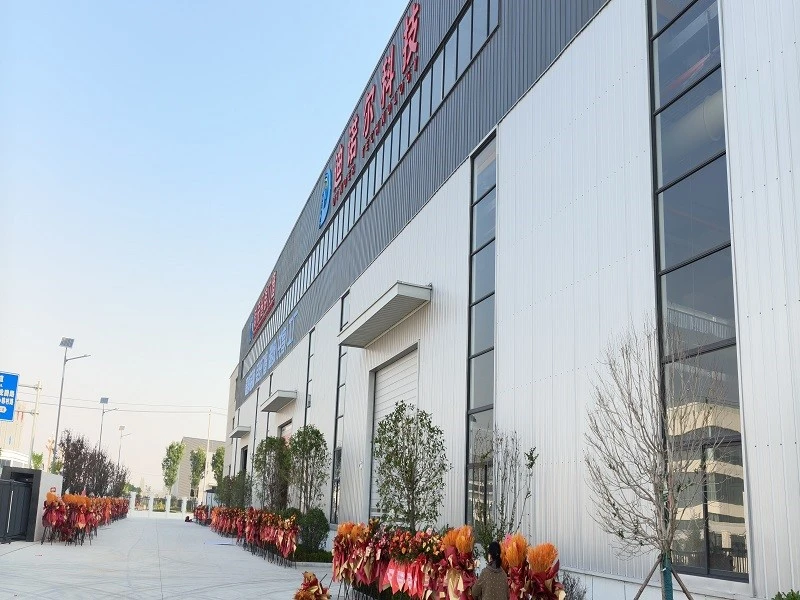
The lines are running again. On 8 October 2026, Dinoer came back from the National Day break and moved straight into the work that was already locked in: confirmed orders, engineering reviews, coating schedules, and the fourth-quarter production plan. If you have been waiting for the holiday to end before sending that drawing or finalising a coating choice, this is the moment it matters.
Restarting a factory is easy. Restarting a queue of custom titanium anodes is not. Every part in our shop is a project, not a part number. Before a single ampere runs through it, someone has had to pick the titanium grade, cut or form the substrate, machine it, prep the surface, decide on the coating chemistry, set the loading, cure it, inspect it, and — if it is going overseas — pack it for a journey it was not designed to survive. None of those steps can be rushed without paying for it later.
What follows is not a "we are open" notice. It is a note to the people who specify, buy, and install anodes: here is where capacity goes first, and here is what you can do this month to keep your own project from becoming someone else's priority.
The first orders back on the floor are the ones that were ready before the holiday. Drawings signed off. Samples approved. Coating specified. Commercial terms agreed. Those move in the order they were promised, and that is the only fair way to run a shop that sells custom work. It also means the question "can you ship by November?" lands differently depending on whether the answer is being given on 7 October or 21 October.
If your order is still a set of emails and a rough sketch, it will be reviewed — individually, honestly — but it will not jump the queue. And we will not hand you a universal lead time, because no such number exists for a part whose coating changes with the electrolyte, whose price changes with the geometry, and whose deadline changes with the ship.
The coating is where most schedules quietly die. A Ru-Ir (ruthenium-iridium) MMO system is the natural choice where chlorine evolution dominates — brine electrolysis, on-site hypochlorite, chlor-alkali, seawater. An Ir-Ta (iridium-tantalum) formulation is the one you reach for when oxygen evolution is the main event, or when the environment is acidic and unforgiving. Platinized titanium earns its keep in high-purity plating, PCB work, and processes where a stable electrochemical surface matters more than the invoice.
None of that is a brochure choice. Two anodes can look identical — same plate, same mesh, same rod — and still demand different base metal, different coating, different active area, different loading, different electrical connection, different inspection. A shape does not tell you the duty. And the duty is the only thing that predicts how long the part will last.
So when a buyer says "just send me a price for a titanium anode," the honest answer is a question: what is it dissolving at your anode, and what is your water doing to it?
The single highest-return action in October is to send a complete technical package. Not a perfect one — a complete one. At minimum it should name the application and the anodic reaction; the electrolyte composition, pH range and operating temperature; the current density and duty cycle; the geometry, dimensions, tolerances and active area; the titanium grade and any machining; the coating system (Ru-Ir, Ir-Ta, or platinum on titanium); the coating loading or performance target if you have one; the connection, insulation and assembly needs; the testing, certification and documentation you require; and the quantity with the destination.
Ten items. Leave three blank and engineering can still quote. Leave six blank and production cannot be scheduled, because nobody can choose a coating from a hope. This is the quiet bottleneck of the industry: not capacity, but information arriving too late.
Then there is the sample. For a new design, a replacement electrode, or any change in process chemistry, a pilot batch costs a fraction of the downtime it prevents. You cannot judge field performance from a photograph or one lab test. Current distribution, coating stability, cell voltage, local fouling, the behaviour of the connection — all of it changes with how and where the part actually sits.
Treat the sample sign-off as a scheduling milestone, not a courtesy. If prototype testing, coating approval and production release are scattered across three months, the project slips even when the factory is empty. And for repeat orders: keep the original specification, and tell us if the electrolyte, temperature or current density changed. A part that ran beautifully for five years can fail in six months under a new duty. Coatings do not recognise loyalty.
Four moves make Q4 predictable instead of frantic.
One: count your demand now. Electroplating lines, PCB plating rigs, water-treatment assets, electrolysers, cathodic-protection networks, chlor-alkali cells, desalination trains. Replacement anodes are not glamorous, but they are how plants keep running. Order them before the year-end scramble.
Two: separate the emergency from the planned. A rush replacement may need a different substrate, a different coating, a different crate, a different plane. Calling it "just another order" makes both jobs worse. Tell us which one is on fire.
Three: keep the revision consistent. The drawing that won the quote, the sample that got approved, and the part that goes into production should be the same drawing. When they are not, someone pays — usually the person who assumed they were.
Four: ask for a project schedule, not a lead time. "15 days" is not an answer. "Your part enters coating on 14 October, inspection on 22 October, and sails on 28 October" is an answer. It reflects your configuration and the capacity that was actually free.
Logistics is part of the anode, whether anyone admits it or not. Export paperwork, packing that survives a port, hazardous-material rules where they apply, customs, the last mile to site — all of it decides when the anode is truly available, not when it left our door. Confirm the Incoterms, the declared value, the marking and the destination requirements before production is released. A beautiful part sitting in a bonded warehouse is not protecting your cathode.
The point of all this is not a heroic delivery promise. It is alignment. You tell us the envelope; we tell you when engineering finishes, when the coating line is free, and when the crate is sealed. Do it early enough and the part arrives when the project needs it. Do it late and the part is perfect, just two weeks after the shutdown ended.
So here is the practical bit. If you have a project that needs an MMO titanium anode, a platinized titanium anode, or a ruthenium-iridium or iridium-tantalum coated electrode, send the duty — not just the shape. Electrolyte data, target output, geometry, current density, and what "failed" means to you. We will come back with a specification and a schedule you can defend to your own plant manager. Not a part number, and not a guess.
Capacity for Q4 is being allocated this month. The queue is not malicious; it is just a record of who was ready first. Contact us.
Previous: None
Next: Holiday Notice: Our 2026 China National Day Schedule & How to Reach Us