Nov. 10, 2026
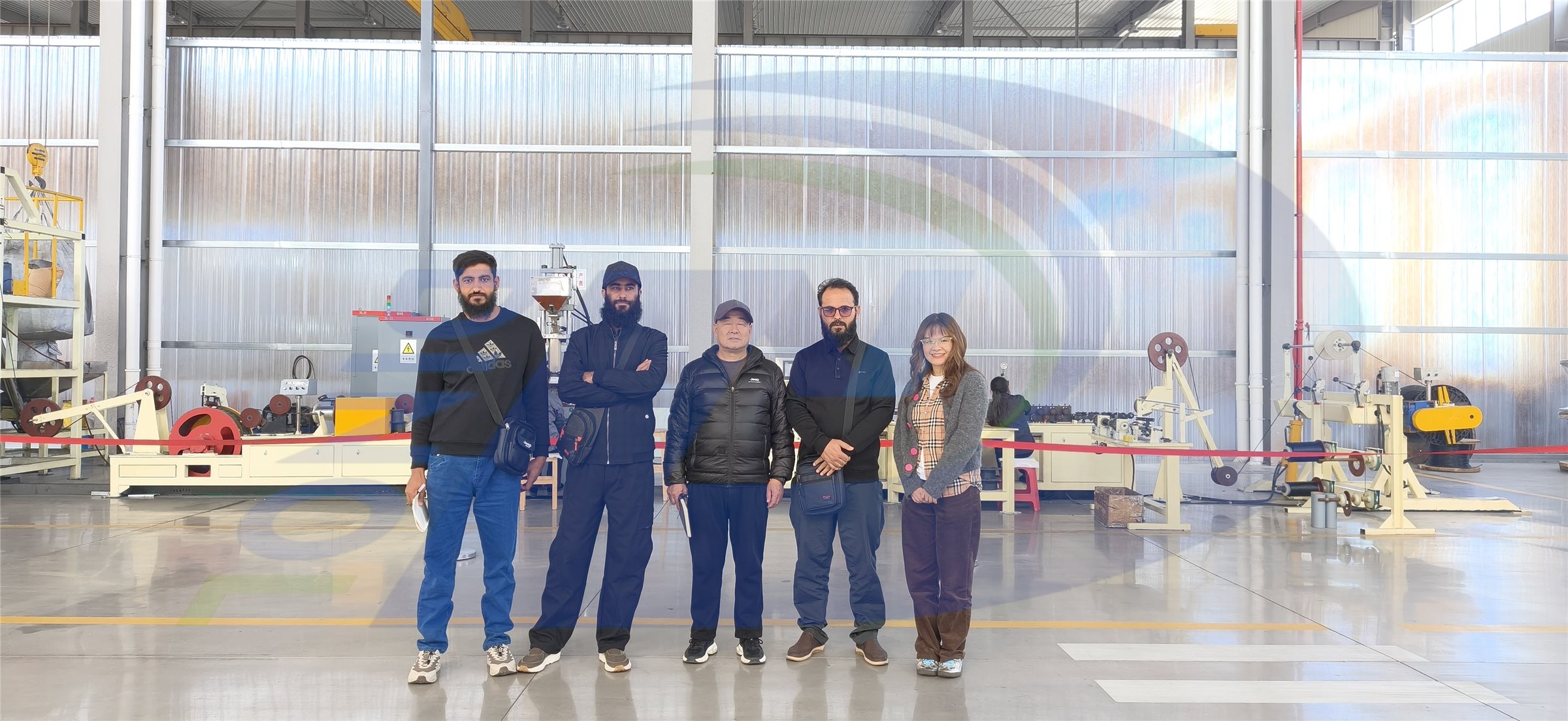
Report The sales engineer who handles this line brought a small group round last week. It was meant to be a quick walk. They ended up standing at the cable-end bench for most of the morning.
You have to lean in to talk in the blast room. The operator passed over a fresh Grade 2 expanded-mesh coupon; a finger ran across it, and the first question was grit size, then how often it gets changed. The shift board by the door is done in pencil — first-piece roughness, this batch Ra 3.5–5 μm on 60–80 mesh white alumina. Our own window.
The furnace was still on further in. Ir-Ta precursor, coat, dry, fire, hold around 480℃ for a dozen minutes, ten-odd passes to a mesh piece. Two curves, mesh and plate; mesh gets the longer soak. A pair of gloves lay on the rail, fingertips worn pale. Nobody picked them up.
They came back to the cable end anyway. On pre-wired anodes the copper-titanium joint is welded, heat-shrunk, resin-potted, then voltage and insulation checked before release, leak records filed under the batch number. Two logbooks off the shelf, one with a turned-down corner. Where did the insulation limit sit? Depends on the job, the technician said — usually above 1 MΩ, some drawings ask for 2 MΩ. The joint itself goes on a four-wire micro-ohmmeter against a ≤0.001 Ω internal limit; a multimeter resistance range won't resolve it. The sales engineer wrote the questions up later. More lines than the quote sheet. Most of them on how conditions get written down and whether a record traces back to a batch. One line had a strike through it, left that way.
DC supplies were carrying coupons in the lab — 1.0 mol/L H₂SO₄, 10,000–20,000 A/m², failure at a 5 V rise over baseline, 100 hours a common pass mark under our conditions. The lab engineer didn't turn it into years. Leafing through the sheet he just said, half to himself, that the same 100 hours means something else if you change the acid or the temperature control. ALT was a batch comparison here.
Over by noon. One logbook went back with its corner still curled.