Home / Technical Support / From Magnesium Alloy to Mixed Metal Oxide Anodes: How Cathodic Protection Anode Materials Have Evolved Over the Decades
Apr. 29, 2026
People who work in cathodic protection know this well: choose the right anode material, and your pipeline stays safe for twenty years. Choose wrong, and you will be digging it up in three to five years, and the cost will be many times higher. Let's focus on the evolution of anode materials, from the earliest magnesium alloys to the cutting‑edge mixed metal oxide coated titanium anodes of today, and see how the path has unfolded.
The earliest sacrificial anodes were simply pure magnesium. Weld a block of magnesium to the pipe, and because magnesium is more active than iron, it corrodes first, protecting the pipe. The principle is straightforward. But in practice, pure magnesium had a problem: it corroded too much on its own. Instead of donating most of its electrons to the pipe, a large portion was wasted on self‑corrosion, reacting with water in the soil to produce hydrogen bubbles. Watching those bubbles form on the magnesium surface was painful for anyone paying for the material.
Metallurgists eventually made significant improvements by adding aluminum, zinc, and manganese to the magnesium, creating magnesium‑manganese and magnesium‑zinc alloys. These additions changed the microstructure of the anode, suppressing self‑corrosion and raising current efficiency from forty to fifty percent for pure magnesium up to fifty‑five to sixty percent. That increase of ten to fifteen percentage points means the same anode can protect the pipeline for one or two more years.
The beauty of magnesium alloy sacrificial anodes lies in their simplicity. Bury it, connect the wire, and forget about it. No external power supply, no potentiostat, no one watching a voltmeter. For small rural pipelines, single well gathering lines, and the undersides of tank bottoms, magnesium alloys are the simplest solution. But there are hard limitations. The driving voltage is only a few tenths of a volt. When soil resistivity exceeds thirty to forty ohm‑meters, the protection radius shrinks dramatically, and sections of pipe several hundred meters away simply do not get protected. For long‑distance, large‑diameter transmission pipelines, sacrificial anodes alone are not realistic.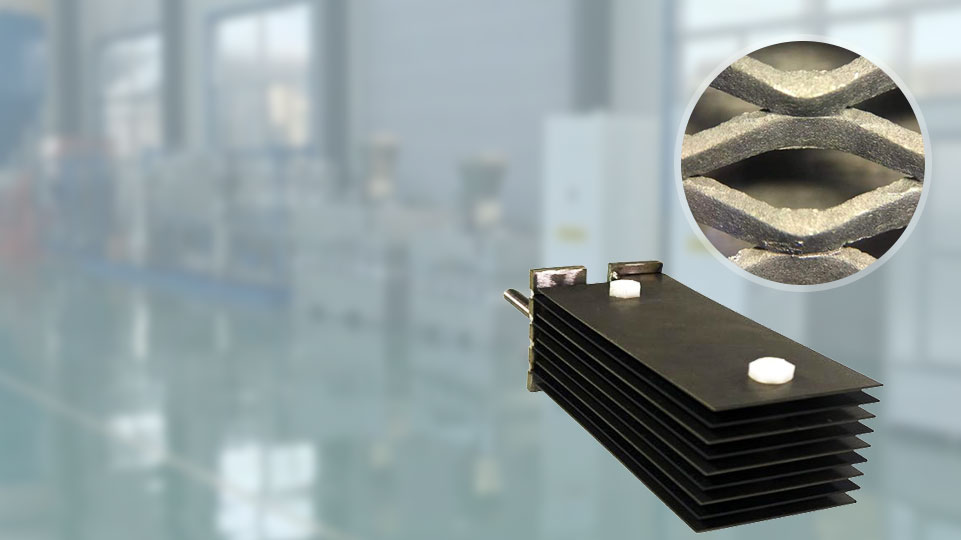
When discussing sacrificial anodes, zinc and aluminum cannot be ignored. Zinc anodes are milder than magnesium, with a lower driving voltage, but they offer excellent stability, especially in seawater and low‑resistivity soils. Aluminum anodes are mainly used in marine engineering: offshore platforms, submarine pipelines, and ship hulls. Aluminum has a higher theoretical current capacity than magnesium or zinc, meaning it lasts longer for the same weight. However, aluminum anodes tend to form a surface oxide film that can cause passivation unless the alloy composition is carefully controlled. Pure aluminum will not work; it must be alloyed with activating elements such as zinc and indium.
These three sacrificial anode materials are still widely used today. The choice is not about which is more advanced, but which fits the site conditions. In high‑resistivity mountain areas, only magnesium will work. Near the coast or in saline soils, zinc and aluminum are often more economical.
Pipelines kept getting longer, with protection distances of a hundred kilometers or more. Sacrificial anodes could no longer handle the job. That is when impressed current cathodic protection emerged. An external power source forces current onto the pipeline, and auxiliary anodes are buried in a ground bed to discharge current into the earth. The earliest auxiliary anodes were made from scrap iron or steel pipe. They were certainly cheap, but they corroded rapidly. Iron ions dissolved into the soil, and within months the pipe or rod became noticeably thinner. Technicians regularly dug up the ground bed to replace the anodes, much like changing tires.
Then high‑silicon cast iron appeared. With about fourteen and a half percent silicon, its corrosion resistance is far superior to ordinary cast iron. When installed in a ground bed backfilled with coke breeze, the consumption rate can be controlled between zero point one and zero point five kilograms per ampere‑year. What does that mean in practice? Assume a station delivers ten amperes of output current. Over a year, the anode will lose only one to five kilograms. Installed properly, it can last eight to ten years. High‑silicon cast iron became the standard for impressed current systems. It is low‑cost, rugged, and easy to manufacture. Even today, many medium and small projects still use it.
But high‑silicon cast iron is not perfect. It is brittle and prone to cracking during transport and installation. The current density must not be too high; otherwise, a non‑conductive layer of silicon dioxide forms on the surface, passivating the anode and preventing current from flowing. Moreover, it is always soluble, so it will eventually be consumed, only at a slower rate.
A true step change occurred with the appearance of mixed metal oxide coated titanium anodes. The substrate is industrial pure titanium, coated with a layer of mixed metal oxides containing active components such as iridium oxide, tantalum oxide, and ruthenium oxide. Titanium itself is highly corrosion resistant in soil and water, and with this catalytic coating, the anode becomes dimensionally stable, experiencing virtually no consumption.
Several advantages stand out. First, the consumption rate is so low that it can be ignored. Under normal operating conditions, the anode lasts twenty years or more without replacement. Second, the allowable current density is much higher. For the same physical size, a mixed metal oxide anode can deliver several times, or even an order of magnitude, more current than a high‑silicon cast iron anode. This means the ground bed can be smaller and more compact. Third, the overpotential is low, which saves electricity. The output voltage of the potentiostat can be reduced, resulting in long‑term savings on power bills.
The disadvantage is simply cost. The unit price is much higher than that of high‑silicon cast iron. Many people shake their heads when they see the initial quote. But those who perform a full life‑cycle cost analysis come to a different conclusion. After accounting for excavation, backfilling, labor for replacement, and the cost of production loss during shutdowns, mixed metal oxide anodes often turn out to be cheaper. This is especially true for offshore platforms, critical river crossings, and pipeline sections under cities where digging is not an option.
After years of working in cathodic protection, it becomes increasingly clear that material selection has no universal answer. On a flat plain with soil resistivity of twenty to thirty ohm‑meters, using high‑silicon cast iron with a potentiostat is economical. For a small branch line several kilometers long, far from the power grid, where pulling a power line costs more than using magnesium anodes, the sacrificial anode solution is the right one. For critical sections or space‑constrained locations, spending more on mixed metal oxide anodes buys peace of mind and long life.
The evolutionary path from magnesium to mixed metal oxide anodes ultimately addresses one question: how to protect a pipeline for its designed twenty or thirty years at the lowest total cost. Materials have changed, potentiostats have changed, testing methods have changed, but the underlying electrochemical principle remains the same. Mastering that principle and applying the right material in the right place – that is where real expertise lies.