Home / News / Powering the Green Energy Revolution: Titanium Anodes as a Key to Cost Reduction and Efficiency Gains in Scalable Water Electrolysis for Hydrogen
Dec. 22, 2025
Amidst the global transition toward a green, low-carbon energy structure, "green hydrogen," as the ultimate clean energy carrier, is gaining increasing strategic importance. However, large-scale hydrogen production via water electrolysis powered by renewable energy (solar, wind) still faces industrial bottlenecks such as high equipment costs, significant energy consumption, and poor adaptability to power source fluctuations.
In tackling these critical technological challenges, high-performance titanium anodes play an indispensable role. Whether in Alkaline Water Electrolysis (AEL) or Proton Exchange Membrane Water Electrolysis (PEMEL) technology, the oxygen evolution reaction (OER) occurring at the anode is the most energy-intensive and kinetically slow step. Titanium anodes provide the fundamental guarantee for the long-term stable operation of electrolyzers due to their unparalleled corrosion resistance in both strongly acidic and alkaline environments.
Their core contributions lie in: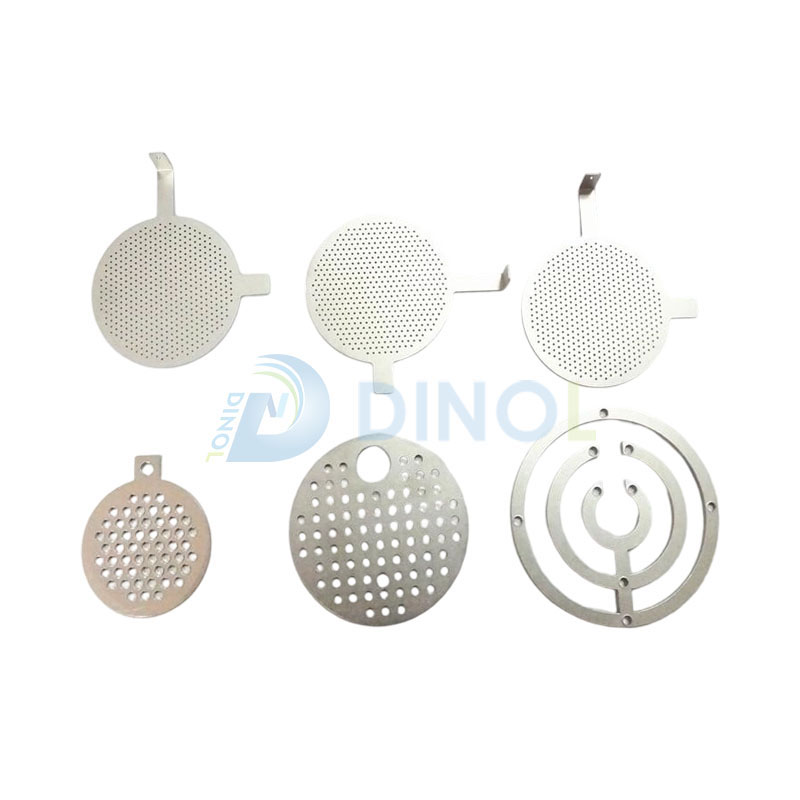
Enabling High Current Density and Improving Hydrogen Production Efficiency: By applying catalytic coatings made of iridium, ruthenium, or their oxides, titanium anodes significantly reduce the oxygen evolution overpotential. This allows electrolyzers to operate at much higher current densities (up to twice that of traditional electrodes). Consequently, hydrogen production capacity per unit of electrolyzer volume is greatly increased, directly lowering the capital expenditure per unit of hydrogen produced.
Adapting to the Variability of Renewable Energy: Wind and solar power generation is intermittent and variable. Titanium anodes, with their rapid electrochemical response characteristics and excellent mechanical strength, can better adapt to rapid current fluctuations. This enables frequent startup/shutdown cycles and power modulation of the electrolyzer, allowing seamless integration with unstable green electricity.
Reducing System Energy Consumption and Extending Lifespan: Advanced coating technologies continue to optimize electrolysis efficiency. Currently, state-of-the-art PEM electrolyzers employing high-performance titanium anodes can achieve stable system energy consumption below 4.2 kWh/Nm³ of hydrogen, approaching the international advanced level of 4.0 kWh/Nm³. Meanwhile, their stability over tens of thousands of hours effectively reduces maintenance and replacement costs over the entire lifecycle.
As global green hydrogen projects enter the gigawatt-scale deployment phase, continuous innovation in titanium anodes—such as developing coatings with lower iridium loading, exploring non-precious metal catalyst systems, and optimizing three-dimensional porous structures—will become a key technological breakthrough for further reducing the cost of hydrogen production via water electrolysis and accelerating the industrialization of hydrogen energy.